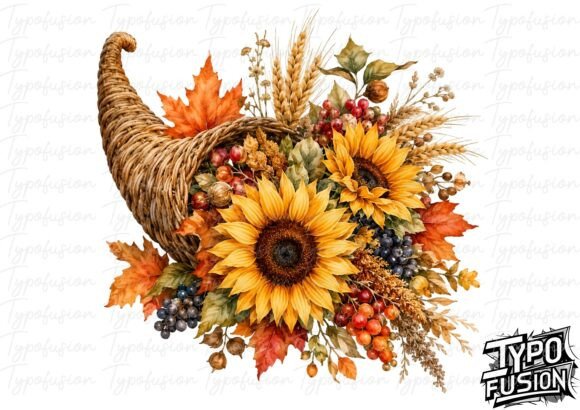
Sunflower Harvest Flower Clipart
There’s a quiet confidence in sunflowers — bold, warm, and full of life. That’s why Sunflower Harvest Flower Clipart has become a go-to visual for creators who want to convey joy, abundance, or rustic charm without overcomplicating their design. Whether you're crafting a hand-lettered wedding invitation, designing a seasonal mug for your print-on-demand shop, or assembling a nature-themed junk journal spread, this clipart delivers instant visual cohesion. But not all sunflower clipart is built the same — and choosing the wrong version can cost you time, print quality, or even customer trust.
Why “Harvest” Matters More Than You Think
The word *harvest* isn’t just decorative here. It signals intention: these aren’t generic sunflowers plucked from a stock library. They’re stylized with earthy stems, seed-filled centers, and subtle botanical realism — often paired with wheat, dried lavender, or burlap textures in curated sets. That nuance makes them ideal for autumn weddings, farm-to-table branding, homesteading blogs, or wellness product packaging. If you’re using clipart for commercial projects — especially print-on-demand or sublimation — matching the mood and seasonality of your audience is non-negotiable. A springy, cartoonish sunflower may feel off-brand beside heirloom tomato labels or linen napkin designs.
A Common Mistake: Assuming “PNG” Means “Ready for Everything”
Yes, the file format is PNG — but that alone doesn’t guarantee usability. Many free or low-cost downloads claim to be “transparent background PNGs” yet deliver files with faint white halos, anti-aliased edges that blur on dark backgrounds, or embedded compression artifacts. When printed at 300 DPI on kraft paper gift wrap or heat-transferred onto a tumbler, those flaws become glaring. Worse, some sellers label a 72 DPI web image as “print-ready” — a misleading shortcut that leads to pixelation the moment you scale beyond 2 inches wide.
What to check instead: Open the preview image in your design software (like Adobe Illustrator or Affinity Designer) and zoom to 400%. Look for crisp stem lines, clean separation between petals and background, and no visible dithering or fringing. True transparency means the background disappears completely — no gray edges, no soft shadows unless intentionally designed.
Another Overlooked Detail: DPI Isn’t Just a Number — It’s a Workflow Commitment
300 DPI matters most when outputting physical products. But it’s not enough to see “300 DPI” in the listing — you need to confirm it applies to the *actual delivered file*, not just the mockup. Some vendors generate high-res previews but ship downscaled versions to reduce download size. That mismatch becomes obvious when your cushion print arrives looking fuzzy around the sunflower’s center.
Here’s a practical test: In Photoshop or GIMP, open the downloaded file and go to Image > Image Size. Uncheck “Resample.” If the dimensions read something like 3000 × 2500 pixels at 300 PPI, you’re good. If it shows 800 × 600 pixels at 300 PPI, the resolution is artificially inflated — and won’t hold up when enlarged.
Transparency Done Right — Not Just “No Background”
A transparent background sounds simple — until you try layering your sunflower over a textured watercolor scan or a distressed wood background. Poorly masked clipart often includes semi-transparent pixels along curved edges, causing muddy halos or unintended blending. That’s especially problematic for sublimation, where ink spreads slightly during heat transfer. What looks clean on screen can bleed into surrounding design elements on fabric or ceramic.
Better approach: Look for clipart labeled “crisp edge transparency” or “alpha channel optimized.” These files use precise masking — not feathered selections — so petals sit cleanly against any surface. Bonus: they scale smoothly in vector-based tools like Cricut Design Space or Silhouette Studio, even when resized for stickers or iron-on transfers.
Instant Download ≠ Instant Usability
“Instant digital download” is convenient — but only if the file structure supports your workflow. Some bundles deliver dozens of sunflower variations in one massive ZIP, with unclear naming (“sunflower_01_v2_FINAL_v3.png”) or no organization by orientation (facing left/right), size (small/medium/large), or style (line art, shaded, outlined). That chaos adds minutes — or hours — to prep time, especially if you manage multiple product lines.
Before downloading, scan the product description for clear file naming conventions and folder organization. Ideal packages group by use case: e.g., “For Sublimation” (high-contrast, bold outlines), “For Scrapbooking” (delicate stems, layered petals), and “For Branding” (clean single-color versions). That kind of structure saves real-time editing and reduces errors in bulk uploads to platforms like Printful or Redbubble.
What to Verify Before You Buy — A Quick Checklist
- No watermarks or hidden logos: Even subtle corner marks ruin professional presentations — and violate most POD platform policies.
- Licensed for your use case: Personal use licenses don’t cover selling mugs or t-shirts. Confirm commercial + POD rights are included.
- Consistent color fidelity: Sunflowers vary in tone — golden-yellow, burnt orange, ochre. Make sure the palette matches your brand’s existing assets (e.g., matches your logo’s Pantone 1235 C).
- Scalability without distortion: Try opening the file in a vector editor. If it rasterizes immediately, it’s not truly scalable — fine for prints, but limiting for embroidery or laser-cut stencils.
- Realistic file size: A true 300 DPI, 10-inch-wide sunflower PNG should be 1–5 MB — not 120 KB (too compressed) or 45 MB (over-bloated with unnecessary layers).
Final Thought: Let the Clipart Serve Your Vision — Not the Other Way Around
Sunflower Harvest Flower Clipart works best when it feels intentional — not decorative filler. That means choosing files that align with your medium (sublimation vs. letterpress), audience (farmers’ market shoppers vs. luxury stationery buyers), and technical constraints (Cricut cut settings, Etsy thumbnail sizing). It’s not about grabbing the prettiest flower online. It’s about selecting a tool that integrates smoothly, prints cleanly, and communicates exactly what you mean — warmth, growth, simplicity, or celebration — without needing extra fixes or apologies to your customers.
When your sunflower clipart arrives crisp, correctly licensed, and ready to drop into your next project — that’s when creativity accelerates, not stalls.