Vintage Floral Divider
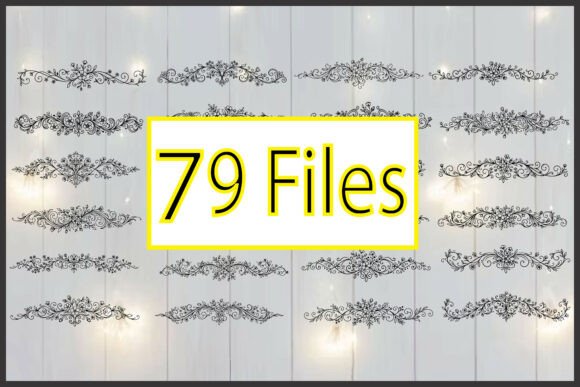
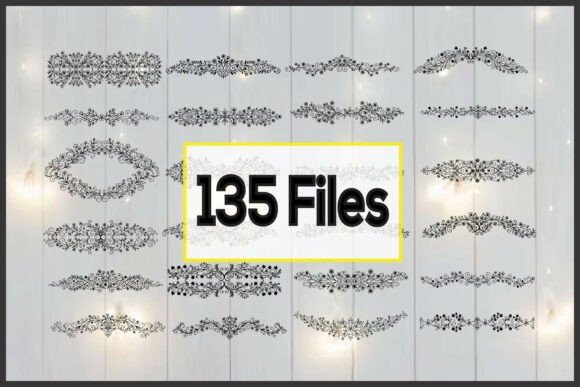
There’s a quiet confidence in a well-placed divider — not just functional, but expressive. The Vintage Floral Divider bundle delivers exactly that: 135 distinct, hand-crafted floral dividers and ornate text separators rooted in Baroque, Victorian, and Rococo sensibilities. These aren’t mass-produced clipart loops or generic swirls. Each design carries deliberate weight — delicate stems curl with intention, filigree lines taper to fine points, and symmetrical flourishes balance intricacy with breathing room. Think of them as visual punctuation: elegant pauses between sections, subtle transitions on a wedding invitation, or refined framing for a boutique product label.
What makes this collection stand out isn’t just quantity — it’s curation. Every divider was created as a standalone vector illustration, then thoughtfully adapted across six formats: AI, EPS, SVG, PNG, JPG, and PDF. That means whether you’re prepping a laser-cut wooden coaster in Glowforge, layering a vinyl decal for a ceramic mug, or placing a crisp black-and-white border in a printed poetry chapbook, the file behaves predictably. No pixelation, no distortion, no guesswork. The SVGs cut cleanly in Cricut Design Space and Silhouette Studio. The EPS and AI files retain full editability in Adobe Illustrator — ideal for adjusting stroke weight, isolating petals, or recoloring for brand alignment. Even the PNGs are provided at 300 DPI with transparent backgrounds, making them drop-in ready for Canva, Photoshop, or sublimation workflows.
Where These Dividers Earn Their Keep
These aren’t decorative afterthoughts — they’re functional design assets with real-world versatility. In wedding stationery, a single scroll border can elevate a minimalist RSVP card from clean to curated. For book design, a repeating floral divider adds rhythm between chapters without competing with body text. Crafters use them as stencils for fabric painting or embossing; small-batch candle makers integrate them into jar labels to reinforce artisanal positioning. Because each file is monochrome vector art — clean black silhouettes against transparency — they adapt effortlessly to foil stamping, engraving, iron-on transfers, and even embroidery digitizing (when traced as paths).
They also work where subtlety matters most: digital publishing. A delicate vine divider between blog sections softens scrolling fatigue. In editorial layouts, they serve as visual anchors — guiding the eye without demanding attention. Unlike ornate fonts or heavy textures, these dividers support hierarchy rather than disrupt it. They don’t shout; they frame, separate, and harmonize.
Designing With Intention — Not Just Decoration
Using a Vintage Floral Divider effectively means treating it like any other typographic element — with attention to scale, spacing, and context. A large, dense scroll works powerfully as a section break in a luxury lookbook but would overwhelm a narrow Instagram story. Conversely, a slender stem motif may vanish at small sizes unless placed against sufficient contrast. Always test at final output dimensions: what reads beautifully on screen may not translate to a 4” x 6” greeting card.
Pairing matters, too. These dividers naturally complement serif typefaces with similar historical roots — think Garamond, Mrs Eaves, or Playfair Display — but they also ground modern sans serifs like Montserrat or Inter when used sparingly. Avoid pairing with other high-contrast decorative elements (e.g., script fonts + multiple flourishes), which risks visual clutter. Instead, let one flourish carry the personality while typography handles clarity.
Licensing That Fits Real Workflows
All 810 files — yes, 135 designs × 6 formats — include unrestricted commercial use. You’re free to apply them to client projects, sell physical goods (mugs, apparel, stationery), license digital templates, or incorporate them into SaaS dashboard UIs. There’s no attribution requirement, no caps on sales volume, and no need to re-license per platform. That flexibility reflects how designers actually work: iterating across mediums, repurposing assets, and building scalable creative systems.
Still, due diligence pays off. Before committing to a project, open a few EPS or AI files in Illustrator to confirm layer organization matches your editing style. Check SVG paths for unnecessary anchor points if you plan to resize dramatically. And always preview PNGs at actual print size — especially if using them for sublimation, where slight anti-aliasing can blur fine lines.
Practical Tips From the Trenches
- Start simple: Try one divider in a single location first — say, centered beneath a headline — before adding repetition. Overuse dilutes impact.
- Respect negative space: These designs breathe best with margin. If your layout feels tight, increase padding around the divider before reducing its size.
- Test color behavior: While optimized for black-on-transparent, many work beautifully reversed (white on dark) or tinted with spot colors. Run a quick mockup in your brand palette.
- Think beyond borders: Rotate a vertical scroll 90° to create an unexpected horizontal separator. Flip a symmetrical motif to generate variation without new assets.
- Batch-process wisely: Use Illustrator’s “Replace Color” or “Recolor Artwork” to update all 135 EPS files at once if adapting to a new brand hue.
Ultimately, the Vintage Floral Divider bundle succeeds because it meets creators where they are — not as abstract “design inspiration,” but as working files with clear purpose, consistent quality, and thoughtful technical execution. It’s the kind of resource you return to across seasons, clients, and mediums — not because it’s trendy, but because it solves problems quietly, elegantly, and reliably. Whether you're laser-cutting coasters for a local café, designing a limited-edition zine, or building a cohesive Shopify theme, these dividers offer more than decoration. They offer design continuity — one intentional, floral pause at a time.