Gildan 18000 Sand Folded Mockup: Elevating Design Presentation Through Intentional Realism
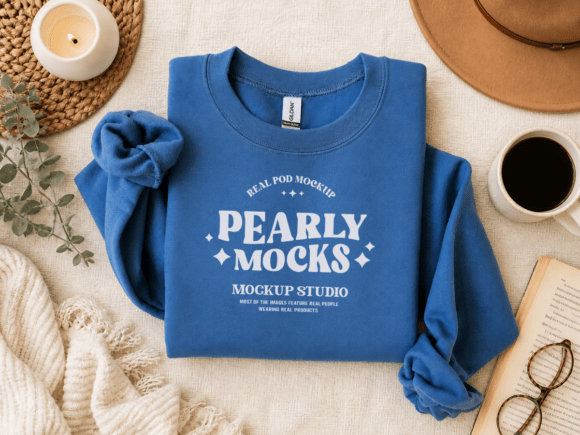
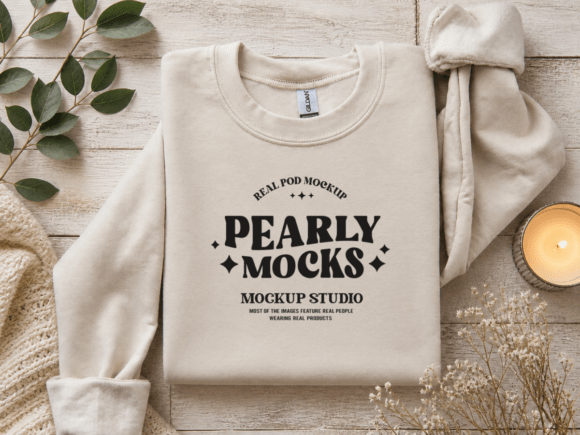
When a design reaches completion, its true impact isn’t determined solely by line weight or color harmony—it’s confirmed in how convincingly it lives in the real world. The Gildan 18000 Sand Folded Mockup bridges that gap with quiet precision: not as a flashy visual trick, but as a grounded, tactile representation of how artwork settles into fabric, folds, and light. Unlike generic sweatshirt mockups that flatten dimension or exaggerate texture, this asset reflects the subtle drape and relaxed structure of the Gildan 18000 unisex crewneck—a garment known for its midweight cotton-poly blend, clean stitching, and sand-colored neutral base. Its folded flat-lay orientation doesn’t just save screen space; it invites focus on proportion, placement, and tonal relationship—critical considerations whether you’re preparing an Etsy listing, pitching to a boutique buyer, or refining a student portfolio.
Why Folded Flat Lay? Context Over Convenience
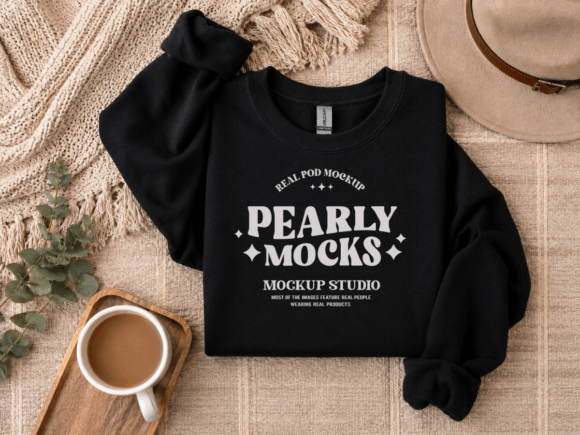
The decision to present the Folded Sweatshirt Mockup in a natural, gently contoured flat lay isn’t stylistic happenstance—it responds directly to how modern audiences evaluate apparel. Scrolling through marketplaces or social feeds, viewers rarely pause over stiff, mannequin-mounted renders. Instead, they respond to cues of authenticity: soft creases, realistic fabric tension, ambient shadowing, and the gentle taper of a folded sleeve. This Flat Lay Sweatshirt Mockup captures those micro-expressions. The sand hue of the Gildan 18000 serves as a versatile neutral—not stark white, not warm beige, but a calm, slightly muted tone that allows both bold graphics and delicate typography to retain clarity without visual competition. It also aligns naturally with minimalist design aesthetics, lifestyle branding, and eco-conscious product storytelling—where restraint and material honesty matter more than ornamentation.
Technical Integrity Meets Practical Workflow
At 300 DPI resolution, the Gildan Sweatshirt Mockup delivers fidelity without bloat. Each pixel supports legibility—not just of your central graphic, but of fine gradients, halftone textures, or embroidered-style effects that might otherwise blur or band in lower-resolution assets. The file arrives as a single, cleanly layered JPG—intentionally avoiding PSD complexity for users who prioritize speed over granular layer control. That choice reflects real-world usage patterns: many creators—from educators building classroom presentations to small-batch POD entrepreneurs updating Shopify banners—need reliability over customization. Because it’s fully compatible with Canva, Photoshop, Affinity Photo, and Figma (via import), there’s no vendor lock-in. You drag your design in, scale it using proportional constraints, adjust opacity if layering is needed, and export. No plugins. No licensing checks. No watermarks obscuring the neckline or cuff.
Design Placement That Respects Garment Architecture
One underappreciated strength of the Crewneck Sweatshirt Mockup lies in its intelligent fold geometry. The front panel isn’t cropped or stretched—it preserves the natural rise from hem to chest, the slight inward curve near the collar, and the soft compression where fabric meets fold. This means when you position a logo or all-over print, you’re not guessing at distortion; you’re seeing how ink or dye would actually settle across that surface. For example, a centered chest design appears neither too high nor swallowed by seam lines. A full-front graphic maintains consistent scale across the upper and lower torso regions, avoiding the “stretched belly” effect common in poorly calibrated mockups. Even text-based designs benefit: serif fonts retain crisp serifs, sans-serif glyphs avoid unintended blurring at curved edges, and line art stays sharp where the fold casts gentle shadow.
Who Benefits—and How They Use It Differently
The Folded Apparel Mockup serves a surprisingly wide spectrum of users—not because it’s “for everyone,” but because its neutrality makes it adaptable to distinct goals:
- Educators and students use it to critique composition principles—testing hierarchy, negative space, and contrast in a context that mirrors final output, rather than abstract canvas grids.
- Print-on-demand sellers rely on it to maintain brand consistency across platforms: the same file works for Amazon Merch thumbnails, Redbubble storefronts, and Instagram carousels—no need to re-export per channel.
- Freelance designers embed it into client presentations not as final deliverables, but as shared reference points—helping non-designers visualize scale and context before approving production files.
- Small studios and indie brands treat it as part of their visual grammar: pairing the Cozy Sweatshirt Mockup with consistent lighting, background tone, and typography builds instant recognition across seasonal drops.
What unites these uses is an emphasis on efficiency without compromise. There’s no learning curve tied to smart objects or complex blending modes—just direct visual translation.
Real-World Considerations Beyond the File
While the Blank Sweatshirt Mockup excels technically, its effectiveness depends on mindful application. Screen calibration remains a quiet variable: the sand base may appear cooler on OLED displays and warmer on older LCDs. That’s not a flaw—it’s a reminder that mockups are interpretive tools, not photographic replicas. For best results, pair the mockup with real-world reference: hold a physical Gildan 18000 next to your monitor, observe how natural light shifts the fabric’s tone at noon versus dusk, and note where shadows pool along seams. Those observations inform smarter design decisions—like choosing a charcoal gray over black for better tonal harmony, or adding a 1% noise overlay to mimic subtle fabric texture.
Also worth noting: the Plain Sweatshirt Mockup intentionally avoids lifestyle distractions—no hands, no models, no curated interiors. That absence is strategic. It keeps attention on the garment-as-canvas, making it ideal for technical documentation, spec sheets, or A/B testing different layout options side-by-side. When context *is* needed—say, for a mood board or campaign pitch—the mockup integrates cleanly into broader compositions: place it on a linen table surface, add a single dried eucalyptus stem beside the fold, or overlay a soft gradient sky background—all without competing with artificial shadows or forced perspective.
Integration Into Broader Design Systems
A single mockup gains compound value when treated as one node in a cohesive asset library. Pair the Sweatshirt Mockup PSD (or its JPG equivalent) with complementary assets: a Gildan 64000 t-shirt flat lay for size comparison, a Gildan 2000 hoodie mockup for seasonal continuity, or even a plain kraft box mockup for packaging cohesion. Consistent lighting angles, shadow depth, and background tone across these files create a unified visual language—something buyers subconsciously register as professionalism. For educators building curriculum, this becomes a teachable moment about system thinking: how individual components serve larger communication goals.
Similarly, the Print On Demand Sweatshirt Mockup fits naturally into automated workflows. Many designers batch-process listings using scripts that inject artwork into standardized mockup frames. Because this file requires no layer unlocking or mask editing, it slots seamlessly into such pipelines—reducing manual steps while preserving output quality.
Final Thought: Clarity as a Creative Discipline
In an era saturated with AI-generated visuals and hyper-realistic 3D renders, the enduring value of the Gildan 18000 Sand Folded Mockup lies in its restraint. It doesn’t simulate fabric physics down to fiber level. It doesn’t rotate 360 degrees or offer pose variations. Instead, it offers something rarer: clarity of intent. Every fold, every pixel, every tonal choice supports one objective—to help your design communicate exactly what it means to say, without visual noise or interpretive guesswork. Whether you’re launching your first store, teaching foundational design, or iterating on a decade-old brand identity, that clarity isn’t just convenient. It’s foundational.